
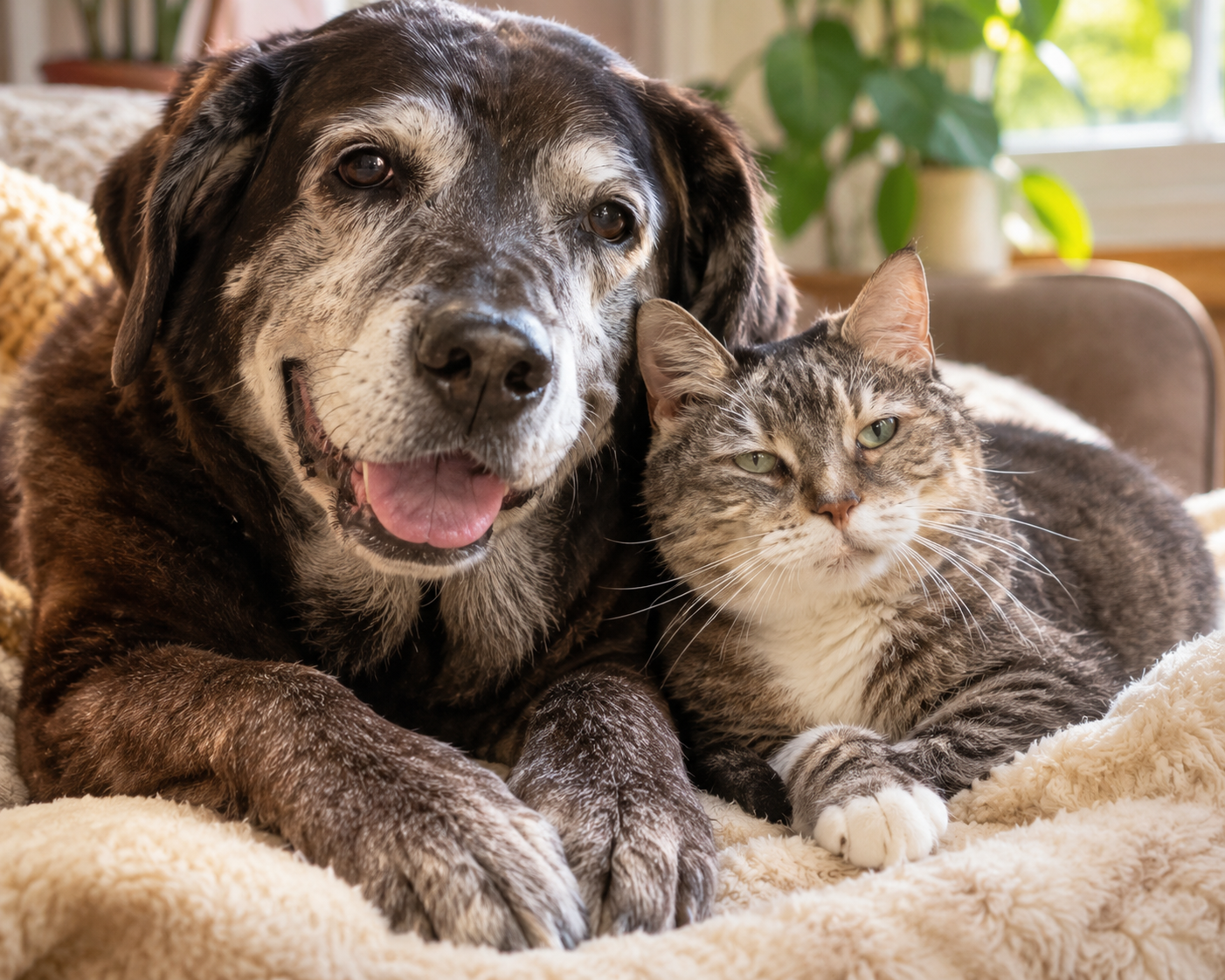
Older dogs and cats have plenty of love left to give. Here’s why a senior pet might be the perfect addition to your family.
When people visit an animal shelter, puppies and kittens often get the most attention. They’re playful, adorable, and full of energy. But just a few kennels away, an older dog may be patiently waiting for someone to take them home, or a senior cat may be curled up quietly, hoping for a comfortable place to call their own.
Senior pets are sometimes overlooked because of their age. Yet adopting an older dog or cat can be one of the most rewarding experiences for a pet owner.
If you’re thinking about welcoming a new companion into your home, here are some reasons to give a senior pet a second look.
1. Their Personalities Are Already Established
One of the advantages of adopting an older pet is having a better idea of their personality.
Is the dog affectionate and easygoing? Does the cat enjoy sitting beside someone on the couch, or would they rather have a quiet place of their own?
With senior pets, shelters and rescue organizations may already have valuable information about their temperament, energy level, and preferences.
This can make it easier to find a companion whose personality fits your household and lifestyle.
2. Many Have Already Learned the Basics
Puppies and kittens require considerable time, patience, and training. From housetraining to learning household routines, there’s plenty of work involved.
Many senior dogs are already housetrained and may know basic commands. Older cats are often comfortable using a litter box and have established daily routines.
Of course, every animal is different, and some may need additional training or time to adjust to a new environment.
And don’t believe the old saying that you can’t teach an old dog new tricks! Senior pets can continue learning, and gentle training, games, and enrichment activities can help keep their minds active.
3. They May Be a Better Match for Your Lifestyle
Not everyone has the time or energy to keep up with an enthusiastic puppy or energetic kitten.
Many older pets are content with a slower pace. They may enjoy leisurely walks, comfortable naps, gentle playtime, and simply spending time with their families.
For individuals or families looking for a more relaxed companion, a senior pet may be an excellent match.
Remember that age doesn’t determine every animal’s activity level. Some senior dogs still love a good adventure, while others are happiest lounging nearby.
The important thing is finding a pet whose individual needs match what you can provide.
4. You’re Giving an Older Pet Another Chance
Senior animals may find themselves in shelters for reasons completely unrelated to their behavior or health.
Changes in an owner’s living situation, financial difficulties, or the loss of a caregiver can leave an older pet needing a new home.
While younger animals often attract attention quickly, senior pets may wait longer to find a family.
By adopting an older animal, you’re offering them something incredibly valuable: a safe home, dependable care, and companionship during their later years.
And the love and companionship they offer in return can be just as meaningful.
5. Age Doesn’t Mean a Pet Can’t Enjoy a Happy, Active Life
One concern potential adopters have is that senior pets may develop medical conditions or require additional veterinary care.
It’s true that aging animals can be more susceptible to conditions such as arthritis, dental disease, kidney disease, and other health concerns.
But growing older is not a disease.
Advances in veterinary medicine, preventive care, and pain management can help many senior pets remain comfortable and active.
Regular veterinary examinations are especially important. The American Veterinary Medical Association recommends veterinary checkups at least twice a year for senior pets, depending on their individual health needs.
Your veterinarian can help develop a care plan that addresses nutrition, dental health, mobility, preventive care, and any age-related changes.
Before You Adopt, Ask a Few Questions
Adopting a senior pet is a wonderful commitment, but it’s important to understand their needs before bringing them home.
Ask the shelter or rescue organization:
- Does the pet have any known medical conditions or take medications?
- What is their temperament, and how do they interact with other pets and people?
- Are there any dietary, mobility, or daily care needs?
- What veterinary records or health information are available?
It’s also a good idea to consider potential veterinary expenses and whether your home may need small adjustments, such as nonslip rugs, a comfortable bed, ramps, or an easily accessible litter box.
Once you’ve adopted your new companion, schedule a veterinary examination to establish a baseline for their health and discuss an appropriate wellness plan.
Sometimes the Best Friend Is the One You Didn’t Expect
A little gray around the muzzle, a slower walk, or a preference for afternoon naps doesn’t diminish the companionship a pet can bring.
Senior dogs and cats still have personalities to share, new experiences to enjoy, and relationships to build.
They may need a little extra patience, understanding, or veterinary attention, but they have just as much to offer as younger animals.
So, the next time you visit an animal shelter or rescue organization, take a moment to meet the older pets.
Your next best friend might already have a few gray hairs—and plenty of love left to give.
Before adopting, talk with your veterinarian about the health needs and ongoing care of an older pet. A little preparation can help you and your new companion enjoy a wonderful life together.
The article is based on recommendations and information from:
- American Veterinary Medical Association — Senior Pets: Age-related health, twice-yearly veterinary examinations, mobility, and senior wellness. ebusiness.avma.org
- PetMD — 6 Things to Know About Adopting a Senior Dog: Temperament, housetraining, adjustment, adoption considerations, and senior pet care. PetMD
- PetMD — What to Know About Adopting a Senior Cat: Benefits and special considerations of adopting older cats. PetMD
- AVMA — Selecting a Pet Dog: Choosing a pet that fits your family’s needs and lifestyle.